


It is not easy to improve polyolefin resins with additives because they are resistant to mixing with additives. Polyolefins are neutral and non-polar, which repels many additives. Therefore, the use of a coupling agent additive or a coupling agent masterbatch is necessary in its place.
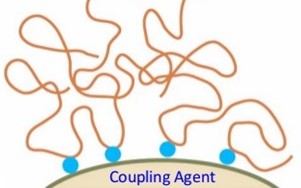
Fillers do not tend to combine with neutral and non-polar polyolefins, so coupling agents and dispersion aids are essential. Without good dispersion and proper adhesion of the polymer matrix, fillers and other additives will have very limited and limited effect on improving the properties of the blend, and the properties created by the raw polymer properties may even be weaker. In order for the coupling agent to be effective, it must surround the filler or additive well and create a bond between the additive and the polymer matrix. Some suppliers coat the fillers and fibers with a coupling agent. The coupling agent may be added to the polymer matrix during the mixing or extrusion process. This material may increase the output of the extruder and also improves the dispersion of a high percentage of pigments and fillers. The selection of the appropriate coupling agent or coupling agent additive has a very important effect on the dispersion of the filler or pigment and the degree of their bonding with the polymer matrix.
Common coupling agents in the masterbatch and compound industry include:
• Maleic anhydride
Maleic anhydride is used as a coupling agent additive to couple glass fibers or cellulose fibers with polyolefin resins. Maleic anhydride is grafted with the polymer and copolymerized with it. Grafted maleic anhydride is widely used for glass fiber and polypropylene composites. In this case, the amount of fibers, the concentration of the coupling agent, the melt index and the process factors establish a complex relationship that ultimately determines the mechanical properties of the resulting composite.
• Silane coupling agent
Organosilanes are another group of these additives that are widely used. They are especially used for mineral fillers such as talc, mica, clay, metals and metal oxides that are added to polyolefins. Silanes also appear as filler dispersants. Silanes prevent fillers from caking and allow a higher weight percentage of fillers to be used, which results in better properties.
• Titanates as coupling agents
Silanes are not very effective for fillers with lower surface energy, such as carbon black and calcium carbonate, so they were chosen as alternatives. Titanates and zirconates have been used instead of silanes. These agents have oxygen groups on their surface and react with the surface active protons found on the surface of all fillers. Unlike silanes, which require hydroxyl groups on the surface of the fillers.
These agents can increase mechanical properties, reduce melt viscosity, and ultimately improve filler dispersion. In ATH flame retardant blends that contain a high percentage of flame retardant additives, titanates increase flowability and impact resistance properties. Coupling agents can be coated on the filler surface (surface treatment of fillers) or added to the resin in concentrated form or as a masterbatch to mix well with the polymer.